Uncharted 4: The Perfect Farewell to Nathan Drake
Uncharted 4 gave Nathan Drake a quiet, domestic ending — and it was perfect. Here's why Naughty Dog's brave farewell redefined how game sagas should end.

- Uncharted 4 closes Nathan Drake's story with a peaceful, domestic epilogue rather than a tragic death — a bold and rare choice in action gaming.
- The finale explores themes of legacy, obsession, and family, making it one of the most emotionally satisfying endings in video game history.
- Compared to farewells like MGS4 and God of War, Uncharted 4 stands out for rewarding players with hope rather than tragedy.
How Do You Say Goodbye to a Gaming Icon?
In an industry where heroes rarely retire — they die, they disappear, or they're rebooted — Naughty Dog made a decision with Uncharted 4: A Thief's End that felt almost revolutionary. They let Nathan Drake live. Not just survive the final act, but truly live: settle down, start a family, hang up the grappling hook for good. Released on May 10, 2016, exclusively for PlayStation 4, Uncharted 4 was marketed as the final chapter of Nathan Drake's story, and the weight of that promise was felt from the opening frame to the last.
The game picks up several years after Nathan has retired from fortune hunting, living a quiet but restless life with his wife Elena. When his long-lost brother Sam reappears — claiming to be in debt to a dangerous criminal — Nate is pulled back into the world of thieves for one last adventure. What follows is a globe-trotting chase after the legendary treasure of pirate captain Henry Avery, but the real journey is an internal one: a reckoning with who Nathan Drake is, who he wants to be, and what he is ultimately willing to sacrifice for the people he loves.
Developed by Naughty Dog and published by Sony Interactive Entertainment, Uncharted 4 earned a staggering aggregated rating of 93 on IGDB — a testament to just how precisely it executed its ambitions. But critical scores only tell part of the story. What makes Uncharted 4 truly remarkable is not its technical polish or set-piece spectacle, but the courage of its ending: a quiet, domestic resolution for an action hero in a medium that almost never allows its protagonists to simply walk away.
What Makes Uncharted 4's Ending Stand Out?
The ending of Uncharted 4 does something most action games simply refuse to do: it resolves the central tension not through violence, but through understanding. The game's final act delivers the expected climax — a showdown on a sinking pirate ship, chaotic and kinetic — but what comes after is where Naughty Dog reveals its true hand. Rather than killing Nathan Drake off heroically, or leaving him wandering into the sunset alone, the epilogue jumps forward 12 to 15 years to show him living a genuinely happy life with Elena and their daughter, Cassie.
The masterstroke is that you play as Cassie before you even realise who she is. Exploring a house filled with artefacts, journals, and trophies from Nate and Elena's adventures, you piece together the lives they built together. It is a love letter to the series — and to the players who spent years with these characters. By the time Cassie discovers her parents' history and the camera pulls back to reveal Nate and Elena watching her from a distance, visibly older and visibly content, the emotional payoff is immense. There is no dramatic sacrifice, no last stand. Just life, continuing.
Throughout the main campaign, the writing earns this conclusion. Elena and Nate have real, adult conversations about legacy, promises, and the wisdom of letting go. The story of St. Dismas — the penitent thief of the title — runs as a quiet parallel to the brothers' arc: one who found peace, one consumed by obsession. The game never lectures; it simply shows. And by the time the credits roll, the message is clear: the greatest treasure Nathan Drake ever found was a life worth coming home to.
The Brave Choice: Why a Peaceful Ending Is Harder Than a Tragic One
In storytelling — across all media — killing off a beloved character is often seen as the bolder, more artistically serious choice. A tragic ending signals gravitas. It says: this world has weight, actions have consequences, no one is safe. Game narrative has historically leaned hard into this assumption, particularly in the era of prestige gaming that followed The Last of Us, Heavy Rain, and the darker entries of the Assassin's Creed franchise. Audiences were conditioned to expect loss.
Naughty Dog pushed back against that expectation. Creative director Neil Druckmann and writer Josh Scherr understood that after four mainline games and years of genuine player investment, the truly subversive choice was to let Nathan live — not as a cop-out, but as a considered, thematic statement. The game had spent 15+ hours arguing that obsession destroys and love endures. A death ending would have been emotionally manipulative. A peaceful one was honest. It is worth noting that early development of Uncharted 4 — before Amy Hennig's departure — was reportedly headed toward a darker, more fragmented narrative. The version Druckmann and Straley delivered was a deliberate course correction toward warmth.
This restraint is rare in blockbuster gaming. The industry default, shaped by decades of power fantasy and action-hero mythology, is to reward players with catharsis through spectacle — an explosion, a sacrifice, a villain defeated in flames. Uncharted 4 offers something quieter and, in the long run, more affecting: the image of a man at peace. It is the kind of ending that sits with you not because it shocked you, but because it made you believe in these characters enough to care that they got what they deserved.
How Does Uncharted 4's Farewell Compare to Other Great Game Endings?
The conversation about great video game farewells inevitably circles back to two landmarks: Metal Gear Solid 4: Guns of the Patriots and God of War (2018). Both are masterclasses in closing a character arc, yet each takes a fundamentally different philosophical approach from Uncharted 4. Metal Gear Solid 4 ends Solid Snake's story with a fake-out suicide, a final meeting with Big Boss, and the promise of a life finally freed from war — but Snake is dying from accelerated ageing. It is a farewell drenched in sacrifice and melancholy, beautiful precisely because it is so bittersweet. The game earns its tears through suffering. God of War (2018) doesn't end a saga so much as transform one: Kratos, the god-slaughtering rage machine of the PS2 era, is recast as a grieving father learning to feel again. The ending is one of restrained hope rather than resolution — a beginning, not a full stop. It is a more commercially cautious farewell, designed with sequels in mind, yet deeply effective in its emotional pivot.
Uncharted 4 sits in its own category. Where MGS4 delivers cathartic tragedy and God of War offers transformation, Uncharted 4 offers completion. Nathan Drake does not die nobly, nor is he reborn. He simply grows up — finishes his arc, finds his peace, and passes the baton (literally, to his daughter Cassie) with a smile. Of all three farewells, Uncharted 4's is arguably the most emotionally generous toward its audience. It trusts players to find meaning in happiness, not just in loss. In a medium still wrestling with whether it can tell mature stories without defaulting to darkness, that is no small thing.
Frequently Asked Questions About Uncharted 4's Ending and Legacy
Official Trailer
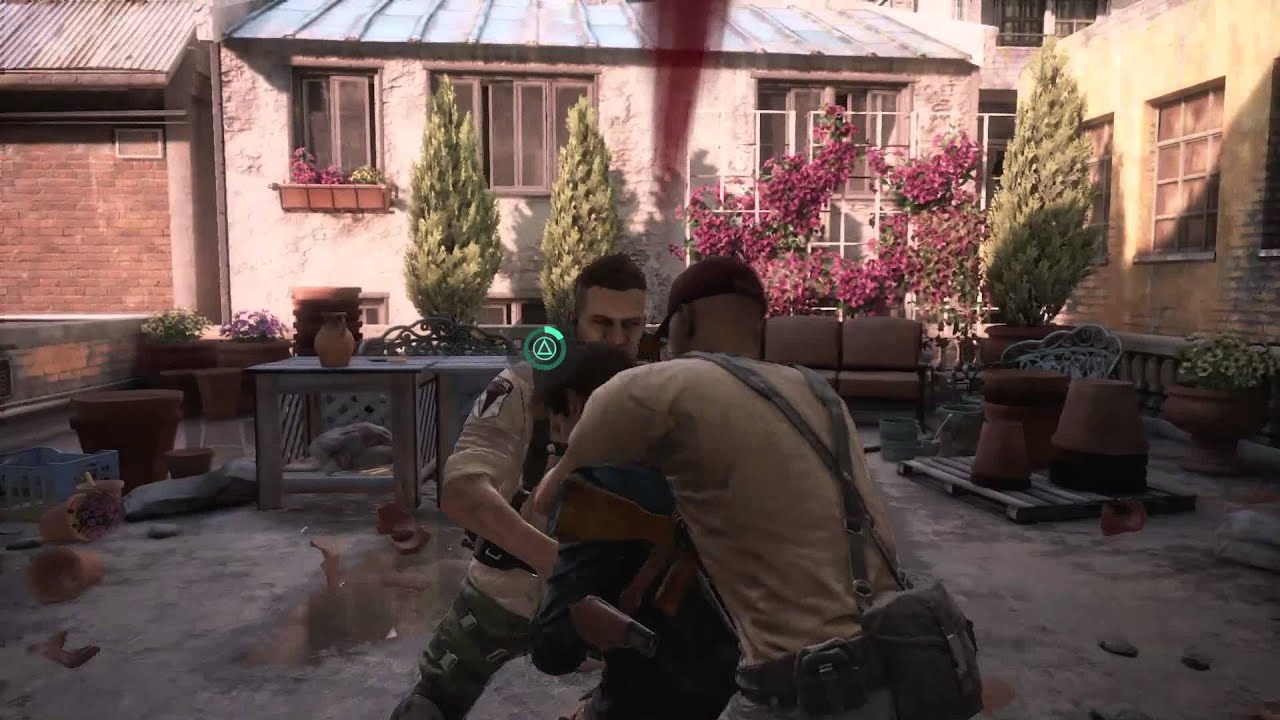
Click to load — YouTube (Google) cookies will be set
Uncharted 4: A Thief's End
- Developer
- Naughty Dog
- Publisher
- Sony Interactive Entertainment
- Release Date
- May 10, 2016
- Platforms
- PlayStation 4 · PlayStation 5 · PC
- Genres
- Action-Adventure · Shooter
You Might Also Like
Uncharted 4 at 10: How the Brand Survived Beyond Gaming
Ten years after Uncharted 4: A Thief's End, we explore how Naughty Dog's cinematic masterpiece shaped action cinema — and what the 2022 film got right and wrong.
Uncharted 4: The Perfect Farewell to Nathan Drake
How Naughty Dog gave Nathan Drake a quiet, domestic epilogue — and why this brave narrative choice makes Uncharted 4 one of gaming's finest send-offs.
Dragon Quest: Toriyama's 10 Most Iconic Monster Designs
Explore the 10 most iconic Dragon Quest monster designs by Akira Toriyama — from the beloved Slime to the fearsome Dragovian. Here's why they endure.