Resident Evil Village at Five: Brilliant Hybrid or Bold Misfire?
Five years on, Resident Evil Village still sparks debate. Was Capcom's gothic action-horror hybrid a triumph or a step too far from RE7's roots?

- Village masterfully blends RE4's action pace with RE7's first-person intimacy, creating a uniquely varied horror anthology.
- Its tonal inconsistency — swapping dread for spectacle — remains its most divisive quality five years on.
- Compared to the RE4 Remake and beyond, Village looks like a bold pivot that defined Capcom's modern direction.
Is Resident Evil Village Still Worth Playing Five Years Later?
When Resident Evil Village launched on May 7, 2021, Capcom was already riding an extraordinary wave of goodwill. RE7: Biohazard had revived the franchise with claustrophobic first-person horror, and the RE2 Remake had proven that classic Resident Evil DNA could be modernised without losing what made it special. Village arrived as the direct sequel to RE7 — and promptly divided audiences by doing something genuinely unexpected: it sprinted headlong toward action, spectacle, and gothic grandeur rather than doubling down on dread. Five years on, that decision still feels daring. And still feels worth arguing about.
Resident Evil Village is a first-person survival horror game built on the acclaimed RE Engine, and its premise is immediately gripping: Ethan Winters, still scarred from the Baker plantation, has built a quiet life with his wife Mia and newborn daughter Rosemary — until a catastrophic attack shatters that peace and leaves him stranded in a snowbound Eastern European village, desperately searching for his kidnapped child. What follows is one of the most structurally unusual entries in the series: a horror anthology that cycles through haunted gothic castles, flooded fishing villages, factories, and military strongholds, each section governed by a different flavour of dread. It is, as more than one reviewer noted at launch, the most varied Resident Evil ever made.
But variety cuts both ways. The same quality that makes Village feel endlessly surprising in its first hours also makes it feel uneven in retrospect. The transition from Lady Dimitrescu's opulent, tension-soaked castle to the later factory chapters is jarring enough that fans openly debated whether the second half belonged in the same game. In 2026, with Capcom's post-Village catalogue giving us vital context — the RE4 Remake, the RE5 Remake, and the looming RE9 — we finally have enough distance to ask the real question: was Village a successful experiment, or an audacious hybrid that never fully resolved its own contradictions?
What Makes Resident Evil Village Stand Out?
The answer, five years on, remains the same as it was at launch: atmosphere, craft, and the sheer audacity of its design. Capcom's RE Engine is a technical marvel, and Village shows it off relentlessly. The lighting in Castle Dimitrescu is genuinely stunning — warm candlelight against cold stone, shadows that move in ways that make you distrust your own perception. The audio design is equally meticulous: every creak, drip, and distant shriek is placed with the precision of a horror film score. Even players revisiting the game in 2026 on PC or current-gen consoles report that it holds up visually against titles released years later.
Mechanically, Village sits in interesting territory. It inherited RE7's first-person perspective and the intimate vulnerability that comes with it — you feel every hit, every near-miss, every moment of being cornered — but grafted onto that framework is a much more empowered combat loop. Resources are plentiful enough that a competent player rarely feels truly desperate, and the merchant system borrowed from RE4 (literally: The Duke echoes the Merchant down to his cheerful attitude toward commerce amid catastrophe) gives the game a light RPG rhythm that keeps moment-to-moment play feeling rewarding. One PCGamer reviewer noted that Village proved horror games don't need to be difficult to be scary — and that is both the game's most interesting argument and its most controversial one.
Lady Dimitrescu, of course, became a cultural phenomenon in a way few video game characters ever do. Her towering presence, her sardonic elegance, and the cat-and-mouse tension of her castle section generated internet coverage that outpaced the game itself in the weeks before launch. She is also, notably, the best the game has to offer in pure horror terms — and the fact that her section ends before the game's midpoint is precisely the source of so much retrospective frustration. Village knows exactly how to create dread. It simply chooses, in its second half, not to.
How Does Village Compare to RE4 Remake and Beyond?
In 2023, the RE4 Remake arrived and immediately reframed everything Village had attempted. Where Village borrowed liberally from the original RE4's merchant system, pacing rhythms, and action-horror balance, the remake returned to the source and executed those ideas with surgical precision. Leon's campaign is tighter, better paced, and arguably scarier despite its third-person perspective — a remarkable feat given that Village had the advantage of first-person immersion. The RE4 Remake's critical and commercial success (scoring universally in the high 9s and low 10s) implicitly highlighted Village's structural unevenness: Capcom had been reaching for something they would only fully grasp two years later.
The RE5 Remake, which Capcom has confirmed is in development (producer Yoshiaki Hirabayashi referenced RE2 as an inspirational template in a 2025 PC Gamer interview), promises to bring the same rigorous modernisation approach to one of the series' most divisive entries. Where Village's action pivot felt partly improvised — a deliberate lurch away from RE7's pure horror — the RE5 Remake should benefit from the accumulated lessons of three successful remakes. The question it implicitly poses for Village is uncomfortable: did Village earn its action sequences through genuine design intention, or was it feeling its way toward an answer it hadn't yet found?
As for the prospective RE9 — currently confirmed under its working title Resident Evil Requiem — the early signals suggest Capcom is preparing another significant directional shift. Producer comments have emphasised a return to the tension of RE2, which may indicate a pulling back from Village's anything-goes anthology structure. If RE9 leans hard into sustained, oppressive dread, Village's legacy will be that of a glorious, flawed interlude: the game that proved the series could be anything, before the series decided what it actually wanted to be. That is not a small thing to be.
Should You Revisit Resident Evil Village in 2026?
Unambiguously yes — and the Gold Edition, which bundles the excellent Winters' Expansion DLC, makes the case even stronger. The Shadows of Rose story DLC is particularly noteworthy: a tighter, more focused narrative that corrects some of the base game's pacing sins and delivers the emotional payoff that Ethan's arc deserved. Returning players in 2026 find a game that runs beautifully on modern hardware, looks remarkable, and whose flaws feel more forgivable with the passage of time. The Nintendo Switch 2 version has also introduced Village to an entirely new audience, with performance that impressed even skeptical reviewers.
What Village is, five years on, is a landmark that reveals itself more clearly in the context of what came after it. It is the moment Capcom committed to treating Resident Evil as a franchise that could contain contradictions — that could be intimate and bombastic, frightening and funny, faithful and radical, sometimes within the same hour of playtime. Whether that makes it a successful experiment or a hybrid too bold for its own good depends entirely on what you believe survival horror is for. Village's refusal to give a clean answer to that question may be its greatest strength, and its most enduring mystery.
Official Trailer

Click to load — YouTube (Google) cookies will be set
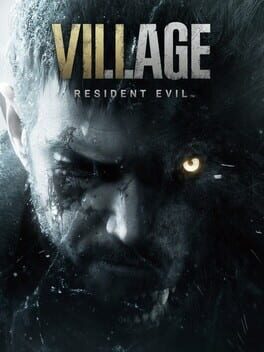
Resident Evil Village
- Developer
- Capcom Development Division 1
- Publisher
- Capcom
- Release Date
- May 07, 2021
- Platforms
- PC · PS4 · PS5 · Xbox One · Xbox Series X|S · Mac · iOS
- Genres
- Survival Horror · Shooter · Adventure
You Might Also Like
Resident Evil Village VR in 2026: The Ultimate Setup Guide
Want the best VR experience in RE Village? Our 2026 guide covers top headsets, anti-motion-sickness settings, and how to explore Castle Dimitrescu in stunning clarity.
RE Engine Evolved: Village's Graphics From 2021 to 2026
How has Capcom's RE Engine aged since Resident Evil Village? We compare the 2021 tech to what RTX 50 Series GPUs and Nintendo Switch 2 can do today.

Dragon Quest: Toriyama's 10 Most Iconic Monster Designs
Explore the 10 most iconic Dragon Quest monster designs by Akira Toriyama — from the beloved Slime to the fearsome Dragovian. Here's why they endure.